Tuesday, May 25, 2010

Homesick Homes

The name of the place was "Nuts." My taxi driver, a real down-home salt-of-the-earth type, swerved the cab up onto the sidewalk and announced in his swampy river city drawl that we had arrived. We were parked in front of a joint called The Hurricane, the kind of glitzy dive where salarymen go to projectile vomit all over each other. The door swung open and a middle-aged man in a shiny suitcoat came tumbling out onto the street. He vomited emphatically. Then he brushed himself off and tumbled back into The Hurricane. Briefly, as the door swung shut behind him, I could hear someone murdering Celine Dion.

"I don't think this is the place," I said.

I searched my crummy cellphone dictionary for the word "nut" and showed the cabby a string of symbols that probably amounted to "testicle." He hawked a loogey and shook his head disgustedly. Then he rolled down the window to consult the roadside riffraff. They hobbled over to stare at me. And the riffraff, too, insisted that I had arrived at Nuts. I shrugged and paid the cabby, who charged me an additional riffraff consultation fee. Then he backhandedly complimented my Chinese while the roadside riffraff smacked their bamboo sticks against the pavement laughing at me. Welcome to China! the cabbby called out the window as he sped off into oncoming traffic.

I have learned over the years to do the exact opposite of what my sense of direction tells me to do, so the moment my sneakers hit the loogey-slick pavement, I turned away from the light and walked toward the darkness. I passed a China Construction Bank, an octopus tentacle vendor, a boarded-up porn shop, and then I came upon an oasis of black-shirted Chinese hipsters, smoking and drinking in the lamplight of an unmarked door. The door flew open and a James Brown B-side came bubbling out. This was no longer China. This, at last, was Nuts.

After I'd passed through customs and checked my backpack at the bar, I wandered right into the midst of a middle school sockhop: boys lined up along one wall, girls along the other. Straightening my collar, I coughed and looked around. Then I situated myself next to the foosball table and shuffled around until a pack of Chinese hipsters relegated me to the narrow slot between an overfull trashcan and a Samsung AC Unit.

Okay, I told myself, be cool. You are American. You are from Omaha. But a year had passed since my last indie rock show - St. Vincent at The Slowdown - and my pre-show shuffle was all out of whack. I found myself at a total loss for what to do during those tense moments before the stage lights came up. I gazed down at my Pumas and shuffled. I gazed up at the vacant stage and shuffled. I made eye contact with a spooky-looking foreigner. I gazed back down at my Pumas. Then I shuffled off to grab a beer.

"Shenme pijiu? Heineken, Hoegaarden, Duwel, Guinness - "
The bartendress made no mention of Tsingtao, or its more lethal counterpart, Snow. Clearly, I was not in Nanchong anymore. I ordered a Carlsberg.
"Oh, and do you sell cigarettes?"
"Zhong Nan Hai," she shrugged.
"What?"
"Zhong Nan Hai."
"Eh?"
She took a carton down from the shelf and held it up to my face.
"Zhooooong. Naaaaan," she said, underlining the characters as she read them. "Hai."

Aha! It clicked. Zhong Nan Hai: a brand of Chinese cigarettes, and incidentally, the name of the first track on the Carsick Cars' self-titled album. Of course! Why hadn't I noticed that before? I'd listened to Zhong Nan Hai hundreds of times and I'd smoked my share of Zhong Nan Hais in the meanwhile. Perhaps I'd even smoked a Zhong Nan Hai whilst listening to Zhong Nan Hai. And yet I'd never made the connection: Carsick Cars, the smartest rock band China has to offer, had written an ode to Zhong Nan Hais, the cheapest, most carcinogenic cigarette China has to offer.

I drifted back to my putrescent shuffling spot. I chatted with a Frenchman until his friends showed up. He bid me au revoir. Then a Dutchman chatted with me until my friends showed up. I bid him vaarwel. A heartwarming Peace Corps reunion ensued. Hugs all around.

"Nice haircut."
"Nice beard. How long you been here?"
"Not long," I shrugged. "Five minutes."

Vijay and I got ourselves mutually drunk on cheap tequila. The opening act - a riotgrrly punk trio named 24 Hours - took the stage. They launched into a jam called "Walrus" and the Chinese hipsters trickled down to the floor. The set did not last 24 hours, though it did include a twelve-minute rendition of Nancy Sinatra's "Bang Bang." Then the lights came up. The Chinese hipsters reassumed their positions - boys on one side, girls on the other - while the motley foreigners pooled in the middle.

Another James Brown B-side. I shuffled and looked around. Where was everybody? In China, you'll be hard-pressed to find a square foot of space that isn't occupied by another human being, and yet here it was: Friday night, a rock show, and Nuts was more half-empty than half-full. Meanwhile, waiting in the wings: Carsick Cars, a band that has toured with Sonic Youth, has appeared in NME, has rubbed elbows with David Byrne - arguably the only Chinese rock band in China, performing for the first time in Chongqing, arguably the largest city in the world. And yet a mere 75 people had turned out for the show, many of them the sort of foreigners you wouldn't want to bump into in a dark alley. Or a well-lit one, for that matter.

So much the better, I figured. All the more permanent ear damage for me. I shuffled around, Carlsberg in hand, almost childishly stoked. In a sense, I'd been looking forward to the Carsick Cars show since the very moment I arrived in China. Not long after I'd adjusted to life in a country whose thesis is harmony through uniformity, I began to long for its antithesis. Diversity. Dissonance. Dissent. And though for eight months I went without knowing the name "Carsick Cars," I knew all along that something like Carsick Cars just had to exist in China, just as I knew that Chengdu, a city of twelve million, simply had to have a Mexican restaurant (if only one of them) ((and not a very good one, at that)).

Carsick Cars were something of an epiphany for me. I became an instant admirer. I listened to their eponymous album for months on end. Naturally, the next step was to see them live and in concert. But Carsick Cars had just embarked on a world tour and, last I'd checked, were playing a house party with David Byrne in Marfa, Texas - so I figured lowly Chongqing with its legions of loogey-hawking cab drivers couldn't be very high on their list. Until sometime last week, when a friend of mine handed me a crumpled-up flier and mumbled, "You heard of these guys?"


"Carsick Cars," I read. "24 Hours. Nuts."

I was going. That's all there was to it. I went to work. I smoked pack after pack of Zhong Nan Hais. Meanwhile, my expectations ballooned beyond all reasonable proportion. This was huge. Hendrix at Woodstock. Elvis Costello on Saturday Night Live. Dylan at the Royal Albert Hall. Carsick Cars at Nuts. I Febreezed my beard and hung my Radiohead t-shirt up to dry. I practiced my pre-show shuffle alone in my room. The week Febreezed by and at no point did it enter my mind that the long-awaited Carsick Cars show might not prove to be one of those epic rock 'n roll fuck-you gestures of lore. At no point did I consider that it might just turn out to be a pretty good indie rock show.

When Carsick Cars took the stage, nobody seemed to know who they were. While the band tuned up, the pit remained empty. Boys on one side, girls on the other. A line at the bar.

"Is that them?" I asked Vijay.
"Naw, I think there's a chick in the band," he said, "or at least a dude who looks like a chick."
"These dudes all look like dudes," I said, and checked the flier. "Maybe there's another opener. Maybe they're up nex - "

The lead singer leaned into the microphone: Women shi Carsick Cars. I shrugged. Vijay shrugged. And together we waltzed across the pit until we were right up against the stage.

In China, there is a code of rock 'n roll etiquette which dictates that rock stars must first politely greet their audience, then thank a litany of sponsors and salarymen, then chit-chat with the audience before introducing each and every song by name. In that respect, Carsick Cars were not very Chinese. They opened with feedback. They closed with feedback. One song screeched into the next. There was no stage banter, no smiles. Carsick Cars were at work. In a country that appreciates rock-as-novelty, makeup and leather jackets, girlish dudes with funky hair riffing on Pachelbel's Canon - here was a band of unattractive nerds whose palette was precisely sculpted noise. All and all, it was pretty good.

I am not a hit monger. I didn't clamor for "Creep" when I saw Radiohead at Wuhlheide, nor did I wet myself when Beck unexpectedly played "Loser" at the Columbiahalle in Berlin. I once saw a guy named Dan Wilson play at The Waiting Room in Omaha, and though his voice sounded awfully familiar, it wasn't until some buffoon shouted "Closing Time!" that I recognized him as the lead singer of Semisonic. And to his credit, Dan Wilson played fifteen songs nobody knew or cared about, then slipped quietly out the back door when no one was looking. So I respect musicians who do their own thing, and at shows, I try to stifle the Free Bird impulse. Nevertheless, I grew increasingly anxious as Carsick Cars plowed through one song after another - were they going to play it? You know, the song about ... the thing? With each opening riff, Erin and I glanced at each other and perked our ears. This is it! The song about ... the thing! But it turned out to be another song about some other thing. When Carsick Cars left the stage and waited in the wings for the encore fervor to mount, I found myself within earshot of the lead singer, and I had to fight the urge to put in a humble request: excuse me, sir, but would you please play the song about, you know ... the thing?

After much whistling and hooting, Carsick Cars returned to the stage. They dove into Zhong Nan Hai and I held my pack of cigs in the air and waved it around until one of Chongqing's many creepy-ass foreigners swiped it from me. I had to rassle him to get my cigs back. Then there was a familiar burst of feedback, a cymbal crash, a forlorn bass riff. Erin elbowed me in the gut. This was it - the song about, you know ... the thing. The Chinese hipster kids started jumping around, colliding with each other like so many atoms. I wondered whether they knew the song was about ... the thing, or if it was just music to them. The crowd jostled me around but I stood in one place, watching and listening. And I grew a bit misty-eyed. I thought about all the heavy books I'd read about China. I thought about China's thousands of years of circuitous history and the horrific struggle that had led however improbably to this moment in time. And though Carsick Cars were one band playing one song that was so lyrically ambiguous as to make you wonder whether it was really about ... the thing in the first place, still: this country has come a long way in a very short time. Zhe shi yi ge meiyou xiwang de guang chang they sang: this is a hopeless square. But they were not arrested for saying so. At least fifty Chinese hipster kids moshed to those words. So perhaps this may not be such a hopeless square after all.

But hopeless or not, I grew a bit homesick. Homesick for Omaha, where such balls, such nuts do not go unnoticed. Where dissent is as inescapable as Taco Bell. Carsick Cars, homesick homes. Almost a year into my Chinese adventure, dissent is what I miss most about America. Dissent, dissonance, diversity. Dissent, I suppose, is what makes America the ugliest, most beautiful nation on earth.

The lights came up. Another James Brown B-side. It was a short set - just under 45 minutes - and Carsick Cars didn't linger. They dissolved. Perhaps they hid out at the bar, or maybe they slipped quietly out the back door. A couple more Peace Corps kids came swaggering in. Hugs all around.

"Aw, shit - we missed it! How was the show?"
"Good," I said. "It was pretty good."

And it was. Yes, Carsick Cars were pretty good. No more, no less. They weren't Hendrix at Woodstock, or Costello on SNL, or Dylan at the Royal Albert Hall. China, perhaps, is not ready for that kind of dissent - and maybe it never will be. In the long run, the Chinese may not want anything to do with our Western modes of expression, our beautiful ugliness. It may be the case that China will never spawn a thriving indie rock scene any more than it will adopt English as its official language. Good for China, I suppose. Why should China do anything the Western way? We have our narrative and the Chinese have theirs. The Eastern and Western worlds may grow intertwined over time, or they may veer off in different directions completely. I have no say in the matter. Why should China westernize? Why should Radiohead play Creep? Why should Beck play Loser? I have learned over time not to pin China down to my expectations. I try to stifle the Free Bird impulse.

Wednesday, May 19, 2010

Death of a Neuron


I open the door and set my backpack on the floor. Then, grinning impishly at my Chinese tutor, I announce, "The Panda is arrived!"

"No!" she shouts.
And so it begins.
"'The Panda is arrived' is wrong," she says. "You should say 'The Panda has arrived!'"

I nod and sit down. My tutor slides today's offering across the table, an article about the perils of job seeking in China, and she tells me to read it. I squint and I squint, to no avail.

"Sorry, teacher," I say meekly, "but I've never seen any of these words in my life."
She laughs.
"What? You don't know the word 'job-hopping?'"
"Ah. No."
"You don't know the verb 'to establish?'"
"Negative."
"'To fall behind?'"
I shake my head. She huffs and shuffles through her papers. My ignorance has once again disrupted her lesson plan.

"Okay," she says. "Job-hopping is tiao cao. To establish is cheng li. To fall behind is luo huo. How do you say job-hopping?"
"Um. Ching ... chong?" I squeak.
"No! How do you say establish?"
"Chong ... ching?"
"No! How do you say fall behind?"
"Ah. Tiao cao."
"No, no, no!" She sighs. Clearly, I am a lost cause. "Okay, write tiao cao."
"But I don't know how."

She writes this on a scrap of paper:


I write this:


"No! That is wrong. Like this."
She writes.
"Like this?"


"No! Like this."
"Aha! Okay. So like this?"


"No, no, no!"

Over the course of an hour, I manage to stumble my way to the end of the article. Questions ensue.

"Why can't young people find jobs in China?" my Chinese tutor asks in English.
"Because there are too many young people and not enough jobs," I rattle off in Mandarin.
"No! That is wrong!" she shouts, again in English. "It's because there are too many college graduates and not enough jobs!"

I blink.

"Why do young people want to live in big cities like Beijing and Shanghai?" she asks.
"Young people want to live in big cities because their hometowns have ... " I reach for the word but can't find it. "Wait. I know this one. Their hometowns have ... have ... wait, I've got this. Their hometowns have -"

And though only a couple of seconds pass in realtime, in braintime those seconds are an eternity in which my brain cells are waging an epic struggle against my chronic forgetfulness. A single neuron unfurls her tendrils, they go waggling out into empty brainspace. Her sexy little axon snakes this way and that, beckoning one of her nearby suitors. A few nanoseconds later, she has wooed the handsome Chinese neuron who lives next door. He unfurls his tendrils, they go waggling out into empty brainspace. She reaches for the Chinese neuron and he reaches for her, and for an instant, it's the ceiling of the Sistine Chapel: all those terminal buttons on the point of touching, almost, not quite, just one ... nanosecond ... more -

"To fall behind!" shouts my tutor. "Luo huo!"

I cringe. There is a burst of static, then my mind shuts down completely. Then a dull ache sets in.

"Ah. Luo huo," I murmur to myself. "Of course. Luo huo. Their hometowns have fallen behind."


The hardest part of learning Chinese in China is not the language. In fact, most foreigners are struck by the elegant simplicity of Mandarin: no conjugations, no plurals, no articles, no genders; he and she and it are all the same word; tense is implied by context; and if you happen to live in Sichuan, those ordinarily pesky tones are mostly irrelevant, because the locals speak a creole of dialect and the proper Mandarin they learn from watching so much damned television. Mandarin is surprisingly easy, and like most languages, it comes naturally after a while. What appears linguistically daunting at first becomes second nature after you've played with the language long enough. But Chinese is not a language one can tackle by oneself, so it is necessary to find a Chinese Virgil to shepherd you through the 36 Chambers of Mandarin Hell. And that, by far, is the hardest part of learning Chinese in China: finding someone who can lead you through those 36 chambers without roundhouse kicking you in the brain so many times that you are forced to leave the monastery altogether.

Thus far, my experience with the aforementioned Chinese tutor has been overwhelmingly positive. She works hard and she is technically well-qualified to teach a laowai like me: as an undergrad, she studied Teaching Mandarin as a Foreign Language. She bought me a bottle of rice vodka at the end of my first semester, bought me a cat-themed writing notebook for Christmas, lent me her copy of the Dao De Jing indefinitely. All things considered, she is one of the very few people in Nanchong who treats me like a human being. But she remains Chinese, and she teaches accordingly.

A couple months ago, I borrowed another book indefinitely - this time from the Peace Corps - named The Geography of Thought: How Asians and Westerners Think Differently ... and Why. Despite flipping through its pages for close to an hour, I couldn't find the quote I was looking for, so this will have to do:

Western parents constantly require their children to do things on their own and ask them to make their own choices. ... The Asian parent makes the decision for the child on the assumption that the parent knows best what is good for the child.


If a young American child is struggling to unlock the front door, her father will watch her fumble with the keys until she figures it out herself. If an Asian child is caught in the same predicament, his mother will cut in and say, "No, like this," and unlock the door herself. This is the classic example everyone bats around in China, but I don't know enough about children to confirm or deny whether or not it is true. Nevertheless, it does point toward a fundamental difference between Eastern and Western education. In the West, we learn by trial and error and mostly error. In the East, teachers tell their students what to do, every step of the way. This persists through college and beyond. If I give my Chinese college students an activity to work on independently, chaos ensues. If I lecture at them for ninety minutes, the universe is in perfect order.

So I don't fault my tutor for her teaching methods. I can't fault her for being Chinese. All and all, I am ridiculously lucky to have found her. Many of my friends study with Christian fundamentalists, or Sichuanese college girls who can't even speak Mandarin. But eight months ago, on a rainy night in October, my phone rang for the 1.3 billionth time - yet another anonymous number - and I have no idea what inspired me to answer my tutor's call. But if I hadn't, I'd probably be studying Mandarin with the duckhead vendor on Feng Dun Road.

Thankful as I am for having met my tutor, the way in which she teaches me does more harm to my neurons than good. She practices her English most of the time and laughs at my Chinese. I never went to Catholic school, but my tutor raps me across the mental knuckles with a steel-tipped ruler every time I screw up. She assumes, like many Chinese, that the Chinese writing system is an alphabet, easily decipherable by even the most foreign of foreigners - when in reality, you can comprehend a new Chinese character no better than you can recognize the face of a complete stranger. That's Blake Johnston from Sandpoint, Idaho. Whaddaya mean you don't know him?

I am a man who earned a D minus in Handwriting on what was otherwise a valedictorian sixth grade report card. Even today I am inclined to write my letter E's backwards, and when I read my own journal entries from several months ago, I can barely make out what I was blathering about. So in those early days of Chinese class, I told my tutor that I did not want to study writing, that I wanted to focus on conversational Mandarin. In the weeks that followed, we plunged headlong into the depths of writing and vocabulary, and in the rare moments that I could summon the courage to speak, my words were swatted down with the steel-tipped rulers of No! and Wrong! And so it goes.

In the meantime, my Sichuanese has improved a great deal, mostly from the ten kuai taxi lessons I receive on the ride home from the Jack Bar. The other day, my cabby was a young dude in a silk suitcoat, and when I told him to take me to Xi Hua Shi Fan Da Xue Xin Qu, he shivered all over and giggled. Then he hooted.

"Ooh-wee! Your Chinese sounds so good!"
"Where, where?" I asked in my modest way.
"Everywhere," he said.

He asked me how much money I made every month. I told him. He shook his head and suggested that I look into a different line of work.

"Well," I said, "it's hard for college graduates to find jobs in America. I've been job-hopping for several years now. Our economy's really fallen behind."
"Ooh-wee!" the cabby hooted. "Job-hopping! Fall behind! Your Chinese is really fantastic!"
"Where, where?" I asked again, and blushed a bit.

The cabby drove and I rode. And meanwhile, in braintime, all my drunk neurons unfurled their tendrils, extended their axons and gave each other high-fives. Despite the best efforts of China and its brewing companies, my neurons yet live.

Tuesday, May 18, 2010

Happiness (With Chinese Characteristics)


If I had to choose a five-dollar SAT word to describe the people of Sichuan Province in the year 2010, the word would be "ebullient." I didn't even know what ebullient meant until I came to China. I mean, I could've defined the word for you, but I wouldn't have been able to conjure up a mental picture. But now the word "ebullient" is synonymous in my mind with the streets of Nanchong on a bleary Tuesday afternoon. Outside, it is cloudy, rainy, smoggy, almost Dickensian; the streets are crowded, filthy, and migraine-inducingly loud - but the Chinese are ebullient. Ebullient are the Chinese.

When in their natural habitat - the smoggy, filthy, overcrowded city - the Chinese do not seem to have any discernible mood other than delirious happiness. Imagine if you will: toddlers frolicking in the middle of a four-lane highway, bare butts exposed to the oncoming traffic; college kids chasing each other up and down the sidewalk, squealing, giggling, playing grab-ass; middle aged salarymen smoking, smoking, smoking and cursing with much zest and zeal; and the old timers just sitting and watching the merry madness unfold from a park bench, smiling and nodding like the universe is in perfect order.

The Chinese have moods, of course. But as a foreigner, it is unlikely that you will see many of them. Confucius say you gotta keep that shit bottled up, son. In private, the Chinese leave much to the imagination. In public, aside from the occasional haggling showdown or marital dispute, the Chinese are positively euphoric, as though there is nitrous oxide in the air - and considering what passes for oxygen in these parts, that isn't such a bad guess.

China is quite a change of pace from America, where a kind of paranoid irritation reigns supreme, and it is a world away from my Polish mining town, where everyone seemed at all times to be recovering from a mind-splitting hangover. China is a happy place. Not even Mexico comes anywhere near the sort of manic glee that slaps me in the face whenever I step outside my apartment. There in the driveway are oldsters hoisting up somebody else's grandson: hello, they whisper as I pass, hello! And the baby vomits on himself. And the oldsters laugh. And the baby shrieks. And the oldsters laugh. Baby vomit, and the universe is in perfect order. I will hereby declare, until I am proven otherwise, that China is the happiest country on Earth.

But it is a peculiar sort of happiness. It is Happiness With Chinese Characteristics. The Chinese are not happy in a wishy-washy existential sense, because we are all human beings and if we set aside our differences and work together, we can accomplish beautiful ... - no. The Chinese are happy because they are Chinese. Their happiness stems from the fact that finally, their China is making good on its potential. There is food. There is family. The family has food. That's a lot to be happy about when you think about it. And business: business is good these days. There is no capitalist ennui in China. Making money is still new and exciting, relatively untainted by rich man's guilt. So when business is good and you've got a well-fed family, what else is there to be but madly, deliriously happy?

Meanwhile, as a foreigner, you remain as moody as you have always been, perhaps even more so.

Monday: it rains for the sixth day in a row; you sink into a troth of melancholy.
Tuesday: you figure out how to order hot and sour soup; you're so happy that you weep hot and sour tears all the way home.
Wednesday: the school neglects to tell you about a schedule change; you miss a class and know that you have lost your students for the rest of the semester; when you get home, you punch the hell out of your pleather sofa.
Thursday: the old shopkeeper down the street waves at you and smiles broadly, warmly; this makes your day.
Friday: the water shuts off for 48 hours.
Saturday: somebody claps for you at the Jack Bar.
Sunday: you go to the bank and immediately the bank tellers start laughing at you; you tell them politely, in half-decent Sichuanese, that you would like to withdraw 200 kuai, and they laugh even harder; one of them grunts and slides a piece of paper your way and you write "200 kuai" on the piece of paper and grunt and slide it back; she shows the paper to her friend and together, they laugh.

What in the sandhill is this? you think. I am a customer! Nay, a client! I am a client with two bank accounts! I lend your bank $150, nay, $175 of my hard-earned Peace Corps blood money every month! Granted, I spend most of that money on Chinglish t-shirts and off-brand cola products, but still - your bank is borrowing my hard-earned volunteer blood money and you have the nerve to laugh at me! Why, I'll withdraw every last fen and take my business elsewhere, to the Agricultural Bank of China. Surely there they respect the common man, with his mold-encrusted facial hair and rumpled suitcoat! But no. They would laugh at you there, too. And who can blame them? They are happy and you are moody. And why shouldn't they be happy? It is you who have crashed their party, not the other way around.

So you play the part of the Good Christian and take your 200 kuai. You thank the bank tellers and they laugh at you. You shrug. And then you think of all the wonderful things you'll buy with that 200 kuai: Chinglish t-shirts and off-brand cola products and Panda cigarettes. And for a flicker of an instant, you can see why everyone is so damned happy here. To quote a rock band: here we're allowed everything all of the time. But then you worry whether prosperity might not get old after a while.

Saturday, May 15, 2010

Interesting Times

Before I left England for China in 1936 a friend told me that there exists a Chinese curse — "May you live in interesting times". If so, our generation has certainly witnessed that curse's fulfilment [sic].

— Hughe Knatchbull-Hugessen, Diplomat in Peace and War


I came to China in search of interesting times, and upon arrival, did my darndest to avoid them. I turned my apartment into a bomb shelter, walled myself in with secondhand Russian novels and truly apocalyptic caches of Nescafe. And ten months later, China remains China. I crack open the venetian blinds. There she is. China. Gray and metallic. Under construction. Growing more exotic and mystifying by the day. But I stubbornly remain myself. Four teaspoons of Nescafe, two chapters of Crime and Punishment. Every day I have the option of getting myself into all sorts of Chinese weirdness, but for the sake of sanity, I avoid it, opting instead to pursue my own weirdness in the comfort of my hermetically sealed bachelor pad.

But in China, I am never bored or uninspired or comfortable for very long. With eerie regularity, about once every three days or so, something or someone comes along and startles me right out of my hermetic slumber. China ambushes me on the walk home from work, gives me a wedgie and a purple nurple, steals my lunch money and runs cackling off into the distance. Or she takes me out for karaoke, serves me fresh watermelon and spiced radishes, gets me drunk on Crown Royal spritzers, and at the end of the night, when I insist on paying, she swats my hand away, reaches into her purse and makes it rain. These things happen to me. China does these things to me. I have no say in the matter. I can no more avoid China than MSG, can no more escape Chinese absurdity than I can breathe her air without inhaling coaldust, or drink her tap water without ingesting lead and arsenic and formaldehyde and all the rest. I came to China in search of interesting times, and despite my best efforts, I have found them.

When I came home from Mandarin class last night, a man in a bright orange China Mobile t-shirt was waiting for me in the stairwell. He shook my hand, then hugged me. I laughed uneasily. He followed me up the stairs and slid an ID card out from his billfold.

"My name is Mr. Wang!" he shouted. I turned the card over in my fingers. Indeed, Mr. Wang he was. He asked me where I lived. Upstairs, I murmured. I asked where he lived and he shouted, not here. In his left hand he held a plastic binder. His right hand kept pinching me. We arrived at the fourth floor and he hugged me again. Then he patted my gut.

"Don't ever drink," he shouted, hoisting up his belly for comparison, "or you'll get fat like me!"

My thoughts turned to the bottle of Duwel in my backpack, the first formaldehyde-free beer I'd managed to get my hands on since my arrival. I looked into Mr. Wang's eyes. A flicker of madness there. I could imagine him stabbing me in the stomach, swiftly retracting the dagger and darting down the stairs in one fluid motion. How cruel that would be. Me bleeding to death in the stairwell, a handful of neighbors watching me expire, and this beautiful eleven-ounce bottle of imported Duwel in my backpack that one of my college roommates would dump out over my grave after the funeral. Mr. Wang cackled. I smiled. Then he grew serious.

"No, don't ever get fat! We are men. And we like women. And women like us," he said, banging his fists together in the International Sign Language for "doing the wild thang." He cackled again and smacked me in the gut. The smile slowly faded from my face. I stared at Mr. Wang while he ranted at me. A puzzle was assembling itself in my brain. Mr. Wang looked familiar.

"So," he said, indicating my door, "let's go inside and talk."
"Actually, my apartment doesn't look so hot right now," I said. "It needs cleaning."

By then, one of my neighbors - a delightful chainsmoking Buddha of a man - was watching us from his doorway, smoking a Hongmei and grinning ever so slightly.

"Come on," Mr. Wang insisted. "Let me in!"
"It's very messy in there."
"I'm not scared!" he shouted, and laughed. "No, I'm not scared of anything, because of this!"

He reached down into his shirt and pulled out a small plastic crucifix. I nodded. And so one piece of the puzzle had fallen into place: I was being proselytized. But still, this Mr. Wang looked awfully familiar. Who was he? Where had I seen him before?

"Let's go! Let's go inside!"
"Wait," I said. "First of all, who are you?"

He yanked at my arm, pulled me towards the door. And that was the moment it all came together. Who is Keyser Sƶze? Who is Mr. Wang? Right then I realized that the man on my doorstep was the same maniac who, six months earlier, downtown, had yanked my arm as I was making an important cigarette transaction and tried to drag me out into the street. In the meantime, he had tracked me down, found out where I lived, had waited for me in the stairwell, and now he wanted in my apartment.

"Who are you?" I asked again.
"I'm Mr. Wang," he smiled. "I'm your friend!"
"You are not my friend," I said. "I don't know you."
He laughed. "I understand. I understand."
He turned and tried the door to my apartment.
"It's locked!" he shouted.
"Of course it's locked," I said. "It's my apartment."
"I just want to talk."
"Then we can talk here. What do you want?"
"I want to help you," he said.
"Help me with what?"
"Everything."

He laughed and smacked me in the gut.

"Look," I said. "I just got home from work. I'm very tired. How about we talk some other time."
"Let's talk now! Just for five minutes!"
"I am a busy man," I lied.
"I understand. I understand. In that case," he said, and opened his binder, "do you know where Ao Yan-Fei lives?"
I blinked. Ao Yan-Fei was the Chinese name of one of the Mennonites.
"No," I said. "I have no idea where she lives."
"You don't know?"
"No. Sorry. I have no idea."
"But you must know! You laowais are thick as thieves!"
"I'm new here," I said. "I don't know where anybody lives."
"But I want to help her!"
He smacked me in the gut. I looked him in the eyes.
"I don't think ... she needs ... your help."
"... what?"
"I said, I don't think ... she needs ... your help."
Mr. Wang laughed uncontrollably.
"Everybody needs my help," he said. "Look here."

He opened his binder. I peered over his shoulder as he shouted and thumped his index finger down on the handwritten pages. I squinted but couldn't make out any of the writing, just the words "In the year 1966 ... "

"Okay," I said. "I really have to go."
"Come with me to Ao Yan-Fei's apartment!"
"I'm not going to her apartment, and neither are you."
"What?"
I pointed towards my door.
"You see that? That's my apartment. That's where I live. That's my home," I said. "You are bothering me. I didn't invite you here. I don't know who you are. You're a stranger. You just showed up."

Mr. Wang frowned, then smiled. He raised his finger to speak, but I cut him off.

"And I know for a fact that my friend doesn't want some stranger showing up at her apartment," I said. "That's her home. That's where she lives. It's not polite to bother people at home. It's not very Chinese. You're not being very Chinese right now."

By then, in addition to the chainsmoking Buddha, a couple other neighbors had poked their heads out to observe the spectacle of the furious laowai shouting in bad Sichuanese, and under the gaze of so many Chinese eyes, Mr. Wang grew nervous.

"Just tell me where she lives," he said softly.
"I'm not going to tell you that."
"Okay," he said, "then I will find her myself."

He flung his arms open, hugged me, and swatted the hell out of my back. The bottle of Duwel clinked around in my backpack. Then Mr. Wang turned and scampered down the stairs two at a time. I watched him leave. Then I turned to my neighbor. He glanced at me, glanced at Mr. Wang, then glanced at me again. He spun his finger around his ear in the International Sign Language for "batshit crazy." Then he bid me a good night and shut the door.

After I'd triple-locked the door behind me, I sat down on the couch and cracked open my Duwel. Was it ever good. Then I put on an LCD Soundsystem album and turned it up so loud that the speakers threatened to jump off the table. And I sat there thinking about Mr. Wang. Was he schizophrenic, or just Christian? How did he find me? Why had he chosen me in the first place? Was I right in turning him away, or should I have caved and let him into my apartment, where the squalor of my bachelordom would have driven him away in seconds flat? No, he'd have said to himself, stifling a dry heave, this Pan Da cannot be saved.

In China, confrontations like these are mercifully few and far between. Most of the negative attention a laowai receives is strictly hit-and-run: a distant heckler, constant laughter, constant stares. It is omnipresent, but rarely is it personal. That said, when you finally find yourself mano a mano with someone who is actively conspiring to make your life less enjoyable, it is extremely difficult, almost impossible not to lose your cool. All that hit-and-run aggravation catches up with you all of a sudden. If you happen to have Irish blood pumping through your veins, you must stifle the impulse to punch, to kick, and to swear. You have to take a deep breath and politely suggest to the gentleman that he vacate your 800 square feet of rented property. Fight passive-aggression with aggressive pacifism. Gandhi and Martin Luther King and all the rest. Forgive these people, for they know not what they do. They know not what Irish rage they incur. Speak softly and -

A knock at the door. I sat there, frozen. Another knock. I stared into my beer. Knock, knock, knock. Slowly, silently, I got up and retreated to my study. I turned down my music, then switched it off altogether. Knock, knock, knock. I sat and waited. Thirty minutes passed, then an hour, and still the man knocked. I googled Chinese obscenities. "Fuck off" seemed a bit too strong for my purposes, as did "go to hell," but "leave me the hell alone" felt apropos. Knock, knock, knock. I waited. Knock, knock, knock. I tried to read. Knock, knock, knock. Then I got up, stormed across the living room, and peered through the peephole. There was Mr. Wang, knocking, smiling.

"Listen," I shouted, "I don't need your help."
"I want to help you!"
"This is my apartment. This is my home! You are bothering me!"
"I am trying to help you!"
"Leave me the hell alone!" I shouted. "Get lost!
He laughed. "I understand. I understand."
A moment passed. Then he knocked again.
"Go away," I said, "or I will call the police."
"You're going to call your friend? Ao Yan-Fei?"
"No. I am going to call the police."
"Oh. I understand. I understand."

A beat. I took a breath. I took a step towards my bedroom. He knocked again. So I kicked and pounded all hell out of the door. Mr. Wang let out a startled yelp, then he laughed. He shouted something. Then, finally, I heard his voice receding down the stairwell. I waited there with my ear pressed to the door for a minute or two. Silence. Then I gathered up my bottle of Duwel and my secondhand copy of Anna Karenina and curled up in bed. Oh, Anna, it's been so long. She's looking a bit worse for wear these days. I don't take care of my books. Her spine's all scoliotic, her pages stained with hot and sour soup, her foreword falling out one page at a time. But there she is, Anna Karenina, in all her promiscuous glory, sultry and seductive across the ages. And in these times of interesting times, I can't help but sink into Leo Tolstoy's interesting times. I can put Anna Karenina down. China, on the other hand, is inescapable. I crack open the venetian blinds. There she is. China. A security guard hawks a loogey. A nightbird cackles. Who knows what lurks around the bend?

Monday, May 10, 2010

Michel Gondry is Directing My Dreams

One of the fringe perks of living abroad that I didn't mention in my last post is this: you will have the weirdest dreams of your life. Dreams in which you rattle off complete nonsense in Polish, dreams in which you juggle German, Spanish, and Korean in a single sentence; dreams in which you find yourself in rural Sichuan and suburban Nebraska all at once; dreams in which your American college cronies make cameos in your Chinese classroom, and vice versa. Most of my dreams are pleasant and thought-provoking. But they are sometimes too intense for comfort, and at the far end of the intensity scale are what sleep scientists call hypnagogic hallucinations, or what I am inclined to refer to as waking dreams. You are awake, but dreaming. You are fully conscious but you can't move. The unreal is superimposed upon the real in such a way that you can tell the two worlds apart easily enough, but your nervous system cannot. So your body responds accordingly, and all you can do is sit and watch the madness unfold. Waking dreams tend to be, in a word, terrifying.

The Chinese word for a waking dream is 鬼壓身 (gui ya shen), or "ghost pressing down on body." The Korean term translates into something like "being squashed by scissors." The Mexicans call it subirse el muerto or "dead person on top of you," and the Germanics chalk it all up to a succubus named Mahr, from whence the word "nightmare" is derived. Having spent much of my early twenties on Wikipedia, I was already well aware of all these facts before I experienced my first waking dream, so when it happened, I knew exactly what was going on. But that foreknowledge didn't make the experience any less horrifying.

I was living in South Korea at the time, in a dingy four-room apartment that was much too big for my liking. My bedroom window faced the east and had no curtains, so I was constantly waking up at 6 AM against my will. Late one night, insomnia-crazed and thoroughly fed up, I stuffed a bathtowel in the window frame and draped it down over the glass. Then, awfully pleased with my MacGyveresque ingenuity, I curled up in my usual fetal position and drifted off to sleep.

I woke up with the sun and rolled over in bed to glare at the ineffective towel - and there in its stead was a shimmering blue alien.

Now, I knew myself well enough even then to know that I wasn't schizophrenic, and I was fairly certain that the mushrooms I'd eaten for dinner were not of the magical sort. So I concluded that I was experiencing my first waking dream. But there is nothing more distressing to me than aliens - the cliche garden variety aliens, the hydrocephalic big-eyed ones - so even though I knew the whole thing was just a dream, the sweat was already streaming down my face and my heart began to gallop at a Secretariat pace. While I sat there motionless and gasping for breath, the alien hissed and started walking towards me. I can't tell you how scared I was. My body was frozen solid and there did indeed seem to be a German succubus sitting on my chest, a ghost pressing down on my body, Korean safety scissors squashing my head, a dead person on top of me. I couldn't move and I couldn't breathe. All I could muster was a feeble stream of profanities as the hideous blue thing started bitch slapping me across the face.

Wake up, I told myself, wake up, wake up, wake up. The alien was glowering over me, hissing and spitting, bitch slapping me across the face. I was so terrified that I very nearly became religious right there on the spot. But instead, I willed myself into wakefulness, slowly dragged my body upright, and finally, I was able to swing my arms loose of sleep. I lunged at the alien and caught it by the neck, at which point the alien transformed into an unwashed bathtowel. I held it in my hand for a moment, then threw it against the wall and flopped back into bed. I lay there murmuring the words "holy shit" until I was soothed enough to risk going back to sleep. Well, I said to myself, at least I'd gotten that out of the way. According to Wikipedia, most people only experience one waking dream per lifetime, so I passed out, relieved that I'd never have to deal with what sleep scientists call hypnogogic hallucinations ever again.

Until last night, when I awoke from what I could've sworn were twelve hours of uninterrupted sleep, only to glance at the clock and find that it was 3:30 AM. I sat up in bed but could not move my legs. Panic flared up in my brain. Not this again. Anything but this. I looked around me: there were my legs and there was my bed, and there was my east-facing window, and there was my wardrobe and the space heater in the corner and two weeks of underwear on the floor. Everything was in its right place. And yet nothing quite looked the way it should have. The film was grainy, the angles didn't line up, objects were flickering in and out of existence - and I was just beginning to wonder where I was when the bedroom door shot open and no fewer than twelve people came rushing in. Before I could get a word out, they rolled me over and ripped the sheets out from under me. Then they arranged themselves in a circle and stretched the bedsheet over my head. The circle rotated, the bedsheet began rippling: I laughed - they were playing the parachute game we used to play in third grade P.E. class. I sat under the parachute for a minute or two, watching it roll and ripple above me, and I laughed, and the people laughed, and for a moment I felt like a third grader again. Then the blanket deflated, the people flipped me over and made my bed for me, tucked me in, and hustled back out the door as quickly as they'd come. I sat there giggling for a while, giggling and waiting for whatever was to come next.

Suddenly, a trap door dropped from the ceiling and a clear plastic tube came snaking towards me. I gave it a tug and a showerhead flopped down and mechanically positioned itself in front of my mouth. I reached up and poked at it, then pushed it away from me. There came a hydraulic hiss from the bathroom and the showerhead switched on, blasting me in the face with ice cold Chinese tap water. I gurgled and laughed. The showerhead wiggled this way and that, and after a couple minutes of delirious giggling, I noticed that my bed was sopping wet and that the floor was flooded.

I thought immediately of my third floor neighbors. "Shit," I said, and got up to fetch a towel - and then everything evaporated, everything except my bedroom and the underwear strewn across the floor, the east-facing window and the wardrobe, and my bed, unmade as usual. I searched the ceiling for a trap door but found none. I ran out to the living room but my visitors had vanished. So I shrugged and climbed back into bed. Well, I said to my brain, that was fun. Let's do it again sometime. And I lay there for a few minutes marveling at the human brain, this three pound mass of pink stuff that can create worlds that are as real as reality. And as for reality: the brain creates that, too. But that same three pound mass drives us to drink and smoke cigarettes, goads us into cheating and telling lies, dupes us into working 47 years at that soul-sucking insurance company we hate with every fiber of our being. What a funny thing it is to be human. Aw, hell. Oh, well. I curled up in my usual fetal position and sank into a dream where I was seated comfortably in the backseat of a Nanchong taxi, and all's I had to do was tell the cabby how to get me home.

Listless Mistress

Just before I came to China, I wrote about wanderlove. I coined the pun to describe the long-term contentment with living abroad that sets in after wanderlust has faded, after you've grown jaded to all manner of foreign novelties - squat toilets, babies crapping in the street, movie theaters that sell beer, the Royale With Cheese. Wanderlust becomes wanderlove at the point when you cease to view those cultural quirks as novelties, but as inescapable facts of life.

Love is a difficult thing, and so is wanderlove. It's all roses for the first three months, when you're still flying along on the wings of wanderlust. Babies crap at your feet, and you laugh. You slip and tumble headlong into the squat toilet, and you laugh. You order a Royale With Cheese and they give you six of the goddamn things, and you laugh. Then you hit month four and all those shenanigans suddenly cease to be amusing. You wish you didn't have to sidestep so much human feces on your walk to work, and you wish that you could sit and read Bakunin on the crapper, and you wish that you could just get a Quarter Pounder With Cheese fer chrissakes. You spend the next three months reviling everything about the culture that surrounds you, too proud for homesickness but thoroughly pissed off that nobody conforms to your definition of normalcy. So you sulk and delve into your Russian novel collection, because therein lies normalcy, right?

After six months, you peek out from under your Dostoevskian shell and find that life is once again livable. You make friends. You establish connections. You flourish, sort of. And so begins wanderlove, the understanding that you are not separate from the foreigners around you - however separately they may regard you as a foreigner - but that you are a human being, and that they are human beings, and that you all must live with each other somehow and so on and soforth. Which sounds like a happy ending, but it really isn't. It is only the beginning of a long and often tedious marriage built on a foundation of routine, compromises, petty squabbles and honey-do chores.

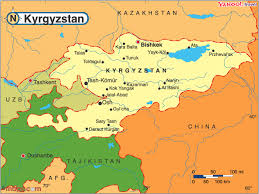
It's like courting the ravishing Anna Karenina and, after six painstaking months, finally luring her away from that robot husband of hers – only to watch her grow obese and leathery and dull before your very eyes. After six months abroad, you start to wonder where the spark went. We used to have such great chemistry, me and China Karenina, but nowadays I'm lucky if she even puts out. She refers to the sex act as our "duty to the Party." And now she wants kids. Kids? To be perfectly honest, there are days when I get home from work, crack open the Rand McNally World Atlas and ogle the hell out of Kyrgyzstan - her exotic netherregions, her vague southern border, that skimpy little green bikini that leaves little of her topography to the imagination.

This is my roundabout way of saying that I am fending off another bout of writer's block. China remains as quirky as ever, but at the moment, I don't find her all that alluring. I tried attacking my writer's block with gross amounts of Nescafe, with formaldehyde beer, with Panda cigarettes. I experimented with cleaning my apartment, then I experimented with trashing the place. Perhaps, I thought, my diet had something to do with it. I ate nothing but cabbage for a week, then I devoured four Royales With Cheese in rapid succession. Then I started appearing at strange new restaurants and pointing at random menu items whose Chinese characters looked menacing, to say the least. I discovered spicy pig intestine soup that way, but the experiment did little to clear my writer's block - or my colon, for that matter.

I'm not sure what the problem is. There is no shortage of material to write about. I still haven't written about my trip to Yunnan, or the Kunming Dwarf Kingdom, or the World's Largest Transformer – nor have I written about the Zebra Music Festival, or the two-hour lecture on Western History and Culture that I gave the other night, or the rural middle school I taught at a couple weeks ago in exchange for a pack of Panda cigarettes, or the Mrs. Robinson of China, who first tried to set me up with her daughter, then literally threw herself at me in the darkness of a karaoke room, asking me in a baijiu-breathed whisper whether I wanted "a Chinese mama." And meanwhile, the babies continue to crap at my feet, the cabbies continue to scare the bejeezus out of me, and my students continue to baffle me. So there is no shortage of material. But what I lack at the moment is the ability to see any of that material as new, or amusing, or worth writing about.

Which leads me back to wanderlove. Who is this pimply old China Karenina in my bed? This is not my beautiful wife! This is not my beautiful house! And the days go by, same as it ever was. You watch her playing mahjongg with her oldster friends and wonder how she could possibly find that lousy game so damned fascinating. For four hours she plays mahjongg, then she comes home and nags you to shave, to get a haircut, to tie your shoes. She asks if you can use chopsticks. Look, honey, for the 1.3 billionth time ... She tells you your classes are too easy, then she tells you they're too hard. She flips through the Russian novel you're reading and shouts, "I can't understand a word of it!" On the street, she picks up and coddles somebody else's baby, then holds it over a sewer drain to take a crap. Then on the walk home all she talks about is babies this, babies that, oh Panda, shouldn't we perform our duty to the Party and make one of our very own? And meanwhile, Kyrgyzstan, that saucy little thing, beckons you from page K-72 of the 2006 Rand McNally World Atlas.

But something about China keeps you around. She is nothing if not consistent. She's loyal, hardworking. She keeps you well fed. She isn't much for conversation, but then, neither are you. Every now and again, she does something charming to remind you of the good old days, when you were young together, and the spark flickers anew, if only for a minute or two. Then, one day, you hear through a mutual friend that Kyrgyzstan has fallen off the democratic wagon and checked into rehab again. You breathe a sigh of relief. Dodged a bullet, there. Maybe, you begin to think, you don't have it so bad after all. You watch China slaving away in the kitchen. My God, you think, the size of that rump! No, China might not be much to look at anymore - the old grey mare, as they say, just ain't what she used to be. She's stubborn, impolite, surprisingly filthy. She's sensitive to a fault and moody as hell. She's jealous of all your past loves: Germany, Poland, Mexico, and especially South Korea, that soju-drinking hussy. She's a sucker for gossip, she pries into your personal affairs, and she can't carry a tune. All and all, she's a totalitarian woman. But can she ever cook ...

Wednesday, April 28, 2010

Garbage Dump

For eight whole months, I scanned the airwaves, scoured the record store shelves, tore the Nanchong bar district asunder - and for my efforts, I found naught but Chinese bubblegum pop. But I refused to believe that China's 1.3 billion inhabitants had never once spawned a decent punk scene. In retrospect, I'm not sure why I didn't try the internet in the first place - but I suppose I had my reasons, and we won't go into those here. Anyhow, a couple months ago, I finally set out on my first Chinese punk rock internet excavation, hoping to find the merest scrap of evidence, the scantiest lo-fi sound bite to confirm my suspicion that the fu-man-mohawk had once flourished in the streets of Beijing, or what is more probable, Shanghai.

It didn't take long. I found what I was looking for in .68 seconds flat. Such is the beauty of the internet, such is why it is so addictive and obnoxious and enlightening: you can Google the Holy Grail, El Dorado, Atlantis, and at the end of an instant, they are yours. In exactly .68 seconds, I had cut through the vast garbage dump of Chinese pop and found two albums that gave me hope, or at least, the hope that there remains some hope to be hoped for.

The first, and the more readily accessible of the two, was Carsick Cars by none other than Carsick Cars. Let's give it a listen. You bust out your Lonely Planet Mandarin Phrasebook and don your Koss brand stoner headphones. You notice lots of feedback, straight on-the-beat guitars, amelodic melodies - it takes you back to the mid-90's, back to when MTV played music videos. It all sounds very familiar, and you don't have to be an intern at Pitchfork to draw the parallel: Carsick Cars are the Sonic Youth of China. And you're probably right. But unlike China's faux-Beyonces and pseudo-Timberlakes, Carsick Cars ain't just plagiarizin'. In fact, Sonic Youth themselves are admirers. A couple years ago, Carsick Cars were invited to open for Sonic Youth in Beijing, but unspecified complications got in the way.

I listened to the album for a week straight and still couldn't make out a word of it, which was reassuring to me. Elementary though my Chinese is, I can understand enough of most Chinese pop songs to know that I wouldn't want to listen to them anyway. But here were sixty minutes of relentless feedback and off-key vocals that made no mention of love, no mention of hearts or feelings or cultural harmony or national pride - which led me to suspect that the lyrics dealt with ... something else. And then one evening I returned home from my Mandarin class to find that I could suddenly understand an entire chorus: zhe shi yi ge meiyou xiwang de guang chang - this is a hopeless square. I listened again and again in disbelief. This is a hopeless square, this is a hopeless square. Something lurked there in those words, though I am not at liberty to say exactly what.

I chased the Carsick thread back to the godfather of Chinese punk, He Yong, who made a name for himself in the 1980's, then attained Chinese Bowie status with the release of Garbage Dump in 1994, only to vanish from the scene completely, resurfacing once or twice a decade to play a lackluster reunion show, or to set himself on fire.

If Garbage Dump isn't schizophrenic, it is at least bipolar. He Yong is Iggy Pop one track and Ziggy Marley the next. Much of the album is too synthetically Latin for my liking, too chintzy, too cheeky. But if you must listen to one Chinese rock song before you die, or any Chinese song period - it is the opening track, "Garbage Dump." Garbage Dump is a jarring experience whether you can understand the words or not. At first, of course, I could not - but the more I listened, the more I understood, and the more the track floored me. Remarkably, it was recorded in the People's Republic of China, in the Year of Our Lord 1994.

The opening line goes something like this: the world we live in is a garbage dump/the people are insects. If you have lived in China longer than two months, Garbage Dump, one minute in, is already Dylan at the Royal Albert Hall, Hendrix at Woodstock, Nirvana unplugged. In a word, Garbage Dump is unimaginably ballsy. Dylan rebelled against the folk scene, Hendrix against the war in Vietnam, Nirvana against existence - but He Yong takes on something far more frightening, far more real and pressing than all those things combined. And perhaps by now, dear reader, having faithfully downloaded Garbage Dump from some shady Russian file sharing website, having donned your Koss brand stoner headphones, having navigated several key changes and countless shifts in tempo and genre, perhaps by now you have arrived at the end of the song, and are wondering what this man, this He Yong, is screaming so maniacally into the microphone.

"You meiyou xiwang? You meiyou xiwang?" he screams. "Is there hope? Is there hope?"

An eerie enough question in English, but even eerier in Chinese.

You meiyou xiwang? Have/not have hope?

This is the same question you might ask a shopkeeper when inquiring about toilet paper, or Marlboros. You meiyou toilet paper? Have/not have Marlboros?

Is there toilet paper? Are there Marlboros? Is there hope? Wonderfully, He Yong leaves the question hanging. Four times he asks: is there hope? You meiyou xiwang? Then he drags it out, slurs it like Jim Morrison singing from his deathbed toilet seat: you meiyou xiwaaaaang? The answer is there in the question. It is a challenge, a call to arms. It's up to you, he says.

Is there hope? It is a question that haunts me yet. I want to ask every shopkeeper I meet: is there toilet paper? is there hope? are there Marlboros? I want to ask my friends back home: you meiyou xiwang? But I don't suppose there is an easy answer to that question - just the hope that there remains some hope to be hoped for.

Tuesday, April 27, 2010

Listless Hello

Bob Marley Night at the Jack Bar. Around 10:30, the cowboys saw me come swaggering in through the saloon doors. One of them set out my two bottles of Bud Ice while the other plugged in my guitar. I sat down and donned a plastic cowboy hat, murmured a listless hello into the microphone. I spread my notebook open on the music stand and flipped past all the songs I love, to the Bob Marley jams that I could only hope my audience might perhaps enjoy.

Over the course of two months, I have watched my lofty musical ambitions crumble to the sea. The first week, I played Beck's Mutations front-to-back. The week after that, I played Yoshimi Battles the Pink Robots in its entirety. But now I dredge up all the happy-go-lucky pop songs I can find, anything that will keep me on stage longer than ten minutes. I no longer perform in the hope of inspiring my audience, or even in the hope of entertaining them. These days, I play for purely selfish reasons: because I enjoy playing, because I love the cool, clean, crisp taste of Bud Ice, and because - well, when else am I going to get a chance to tool around with a thousand-dollar Epiphone acoustic?

I tossed off a couple Marley songs, the ones with "love" in the title. No applause, but already the drunks were yelling at me to come drink with them. As usual, I said thank you, thank you, you're too much, just a moment and I'll be right with you. Then, midway through my cringeworthy rendition of Jammin', a pudgy fortysomething salaryman stumbled up on stage, grabbed my guitar by the neck and shouted in my ear.

"What?"
"Yesdayoncemo!"
" – what?"
"Yesdayoncemo!"
Ah, yes. "Yesterday Once More." A request. Nay, a demand.
"I'm sorry," I said, "but I don't know The Carpenters."
"Takemehome Cuntroad!"
"What?"
"Takemehome Cuntroad!"
Oh. "Take Me Home Country Road."
"I'm sorry," I said, "but I don't know John Denver."

I took Jammin' again from the top. A shudder passed through my soul.

Ooh, yeah. We're jammi -

Then the man thrust a cigarette in my face. I recoiled, so he forcibly stuffed it in my mouth and lit it. He laughed. The audience laughed. Then he stumbled back offstage to harass me from a distance.

My fourth song – "Stir It Up" – would prove to be my last. I strummed a chord.

Stiiiiiiiir it u –

Another dude had pounced up on stage. He shouted something in my ear, then he pushed a beer in my face, pried my mouth open and dumped it down my gullet. Laughter, applause. I stopped playing and stared at the man. Then I cleared my throat and strummed a chord.

Stiii –

"Hey! My Heart Will Go On!"
I ignored him, so he grabbed the neck of my guitar and squeezed.
"Hey! My Heart Will Go On!"
"Hey. I'm sorry," I said, "but I don't know Celine Dion."

Ahem. Stiii -

"Play a Chinese song!"
"I'm sorry," I said, "but I don't know any Chinese songs."
"Do you know Mo Li Hua?"
"No."
"Do you know Kang Ding Qing Ge?"
"No."
"Play a Chinese song!"
I stood up and offered him my guitar.
"Okay, how about you play one?"
Then the cowboys unplugged me.
"Pan Da, no more songs!"

One of the cowboys took my guitar away, put it back in its case, and stashed the case under the bar. The lights came up and I stood there bewildered. The peanut gallery came running up on stage to claim me.

"Do you know any Chinese songs?"
"You should play Chinese songs!"
"You need to learn Chinese songs!"
"Well," I said, "I was hoping I could introduce you to some good Western music. That's why I'm here."
"Oh, Western music," a girl nodded. "Yesterday Once More!"
"Take Me Home Country Road!"
"Hotel California!"
"Tears in Heaven!"
"You Are Not Alone!"
"My Heart Will Go On!"
"I mean," I said, "I was hoping I could introduce you to some new Western music. Songs you haven't heard before. Something new."
"Oh, new Western music," a girl nodded. "Black Eyed Peas!"
"Lady Gaga!"
"Beyonce!"
"Backstreet Boys!"

I was speechless at that point. I had been summoned down to the Jack Bar on a Saturday night to perform seven minutes and thirty seconds of music. It was clear to me then: these people didn't want to be exposed to new music, nor did my own musical taste figure anywhere into the equation. They wanted what they wanted, and they wanted Chinese songs they knew by heart, or the five Western pop songs they knew by name.

A girl tugged at my arm hair.
"You Westerners are so hairy!"
A wave of laughter swept through the crowd.
"Yes," I said, "we foreign devils are so hairy."

Usually, the pejorative "foreign devil" makes people uncomfortable, but not so with this crowd. They seemed proud of me for knowing my place.

"Foreign devil!" said the girl admiringly. "You are so open-minded!"
"Yes," I said, "I am so open-minded."

Tuesday, April 20, 2010

My Life Among The Oldsters

I once attempted to describe the American hipster to my students, which proved to be no small feat. The up-and-coming Chinese youth are about as anti-retro as you can get. Anything that predates Lady Gaga is unhip. Cellphones that do not come equipped with an MP3 player and a 26-watt tazer are obsolete. So when I explained to them that the cool kids in America listen to old music on something called a "record player," that they wear old pants, old suitcoats, and old man hats, the response was unanimous:

"American hipsters are Chinese old people!"

Not quite. But I am inclined to say that old Chinese folk are indeed hipsters.

As wary as I am of Chinese younguns, as put off as I am by the hard-drinking fortysomething nouveau riche, I am completely smitten by the elderly Chinese. But at the moment, I am only a distant admirer. I have yet to break into the oldster scene. They have better things to do than hang out with me. They congregate in the park downtown, in tea houses, or around little streetside poker tables. Legally or otherwise, they gamble - mahjongg, dice games, card games, you name it. They enjoy a violent brand of checkers that involves enormous red and black discs, and when the players make their moves, they slam the discs onto the table - whap! - to the approval or outrage of the throng of oldsters that surrounds them.

The men smoke tobacco from long, metal pipes that resemble Irish tin whistles. The women are stooped from decades of sweeping. Together they walk along the river with their hands folded behind their backs. The elderly will say nothing when they first see you, nothing as you pass them, and nothing when you're fifteen feet away from them. Perhaps some distance later, the old woman will say to the old man, "That was a laowai back there, wasn't it?" to which he'll respond with a soft, rising "O".

This is one of the more puzzling aspects of Chinese society. The younguns, who grew up on Hollywood and KFC, who can sing The Fame Monster front-to-back from memory, are the ones who heckle and fetishize foreigners. Meanwhile, the oldsters, who grew up fearing Westerners, who in seventy years have probably never seen an American live and in the flesh, treat us no differently from anyone else. I write more about hecklers than about oldsters because hecklers are an inescapable part of my day-to-day existence. And because it would be cheesy for me to write something like, "My soul takes flight every time I pass the chainsmoking geriatric shopkeeper on the way to work, because he waves at me and smiles and then pedals off on his bicycle without a word," even though something like that sentiment is pretty close to the truth. I adore the Chinese elderly and I want, someday, to become one of them.

When I first arrived in China, I lived with a host family, and my host parents were hip to the Chengdu oldster scene. My host dad looked like a Chinese Harrison Ford, while my mom bore a slight resemblance to Angelica Huston. Their 27-year-old son, my host brother, could've passed for an alien. The day I moved in, when I asked my host dad what kind of work he did, he said, "I'm retired!" and looked at me funny. When I asked my host mom what she did for a living, she said, "I'm retired, too!" and looked at me even funnier. My host brother, meanwhile, insisted that he was a "worker," though in the two months that I lived there, he left the apartment exactly twice.


Fig 32.7: Pan Da with Host Family


My host parents were up every morning at dawn. Mama would cook breakfast while baba pruned the hedges. Then mama would hustle me off to language class. When I came back home for my Chinese siesta, baba would be cooking lunch. After we'd eaten, mama would scold me to tie my shoes, then she'd hand me an umbrella and boot me out the door again. When I returned in the evening, a six-course meal would already be spread out on the table, and baba would go pound on my host brother's door to wake him up.

More often than not, host dad would break out the baijiu, or some plum wine that he'd made himself. We'd sit at the dining room table for hours, discussing politics in very general terms - Ao-ba-ma is the zongtong of America - and I would nod, scribbling the word down in my notebook. Zongtong, zongtong, zongtong. Host brother never talked to me directly, but he would sometimes linger jealously at the table while host dad and I shot the bull, whining and dining while his father wined and dined me. Host dad would grab a bottle of beer and pour its contents into host brother's rice bowl, which never failed to send the manchild into a tizzy. Baba, bu yao, bu yaoooo!

I'd often find host mom playing mahjongg with the Chengdu Red Hat Society, in a garage across from the apartment. I'd wave and say mama, ni hao! and the old ladies would giggle. I'd ask if she was winning and she'd shake her head and say, "I'm no good at this game!" - though there was a sizable heap of RMB on her end of the table. Then, when she got home, we would go for a walk together along the lake - without host brother, of course. Host dad walked slowly with his hands folded behind his back, and would every so often reach up to pluck a leaf from a low-hanging tree limb. Host mom twirled her umbrella and sang to herself. We didn't talk much in those early days because I was unable to, but we had a pleasant rapport that consisted entirely of lazy sighs and exhausted grunts.

After a couple weeks, I realized that I didn't even know my host parents' names. The words baba and mama were becoming a bit too precious to use in public, so one night, after one too many rounds of rice wine roulette, I asked them.

"Yi Yin Yue," said host mom.
I did my best to repeat her name, but what came out of my mouth, in Chinese, meant Yi Yin Fish.

Host mom covered her mouth and laughed.
"Yi Yin Fish! Pan Daaaaa!" she giggled. "Oh, Pan Daaaaa!"

Red-faced, I turned to host dad.
"My name is Liu Lou," he said in his Sichuanese drawl.
"Niu Rou," I said - the Chinese word for beef. Host mom fell off the couch.

"Yes, my name is 'beef,'" said host dad, grinning.
"Pan Daaaaa! Oh, Pan Daaaaa!"

Mr. Beef hoisted his glass.
"He jiu!" he said. "Drink!"


The Corps kept me busy in those days - language lessons, safety seminars, Friday night bull sessions that carried over into Saturday. On the weekend, I wanted nothing more than to sleep, so sleep I did. One Sunday morning, around eleven, there came an unusually insistent knocking at my bedroom door. It was host mom.

"Pan Da!" she shouted. "Pan Daaaaa!"

I slogged out to the dining room and there was host dad sitting at the dinner table with two glasses of rice wine set out in front of him.

"Pan Da," he said. "It's time to eat. It's time to drink."
"Thanks," I said, "but it isn't noon yet and I don't like to - "
"Eat! Drink!"

So we ate, and we drank - far more on both counts than is recommended by Surgeon General Tso. By noon, a high-pitched frequency was buzzing through my brain, and I was only slightly better off than host dad, who kept dropping chicken feet on the floor. After a while, we both began to drift off to sleep.

"Song Min-Tao!" host dad shouted all of a sudden.
"Song Min-Tao?"
"Yes, your friend Song Min-Tao. What is he doing right now?"
"Um, he's probably asleep," I fibbed, "or studying."
"Call him up!" ordered host dad. "Bring him over. Together we will eat - and drink!"

Through one of those fortuitous coincidences that have lately befallen me in spades - like being christened Pan Da - my good friend Vijay (Song Min-Tao) happened to live right next door. His host family and mine were old friends, or old nemeses - it was hard to tell which - so we often went out for hot pot together, though Vijay's host brother - like my own - seldom joined us, for fear of the sun.

"Call him up!"
"I really think he might be studying," I said.
"That's okay," said host dad. "We'll study Mandarin - together."

The official language of the Liu household was Sichuanese, so I knew a Mandarin study session was unlikely. But host dad insisted, so I sent Vijay a short and diffident text message and, at host dad's behest, downed another shot of baijiu.

A couple minutes later, host dad belched and checked his watch.

"Ai-ya, where is Song Min-Tao? What's keeping him?"
"I bet he's studying. He studies very hard on the weekends and - "
"Give me the phone. Let me talk to him."
"I - well, see - the thing is - he's very busy these days and - "
Host dad snatched the phone from my hand and within seconds, he had our neighbors on the line.

"Yes. Hao, hao. Let me speak to Mr. Song," he said. "It's important."

I began to laugh uncontrollably: Mr. Song! This was happening. It was inevitable. And I could in no way be held to account. It was all host dad at this point.

"Mr. Song? Song Min-Tao? Yes, hello. It's me, Mr. Beef, Pan Da's baba." Host dad turned and shot me the slightest grin. "Have you eaten? Yes? No matter. I would like to invite you over for lunch. Your friend Pan Da and I are studying Mandarin and drinking - green tea."

I clapped my hands together and collapsed on the table laughing.

"Yes, it's very important that you come. We have already cooked a little something for you," he said. "Yes, yes. That's right. We're just over here studying Mandarin and drinking - green tea."

He handed the phone back to me. I wanted to high-five the man, but though he was grinning ever so slightly, he didn't seem to find the situation as funny as I did. He sat back down across from me and we silently awaited the arrival of Mr. Song.

A knock at the door. Host mom got up to open it. In came Vijay, half-asleep in sandals and jogging shorts, a wrinkly gray t-shirt. In a glance, he took in the scene - the chicken feet on the floor, the empty bottles, red-faced host dad, a greasy-haired and grinning Pan Da. He smirked.

"Sup, y'all?" he said. "What's going on?"
I giggled. "Nooooothin'."

We exchanged a fist pound.

"Please sit," said host dad, and Vijay sat. Host dad started pouring him a shot.
"Oh, actually, I don't - "

Too late. I gave Vijay the international "take one for the team" look and he nodded. Host dad hoisted his glass. He jiu!


Little by little, my Sichuanese improved and so did our dinner table talks. I asked host dad where he'd traveled in China and he said, let me show you. He fetched a photo album from behind a case of beer and spread it out on the dining room table.

And there they were, mama and baba at the Great Wall. I laughed. Host dad was a hipster! He looked pretty damn cool back in the 70's, with a swoop of hair scooped across his forehead and the slightest hint of a goatee. And host mom was gorgeous - and still was, I was careful to add, which set mama a-gigglin'.

"Beijing," said host dad, and turned the page.

Baba with his hipster bros in the Forbidden City. It looked like an album cover - goatees, kitschy suitcoats, the smirking visage of Chairman Mao in the background.

Baba turned the page. Host brother was born. As a kid, he didn't look nearly so bratty or so alienlike. He even had complexion back then. But I noted that his outfit hadn't changed in twenty years: a green and white striped polo tucked into drawstring shorts, sandals with socks.

We sat reminiscing for a while. Then host mom went to bed and so did host brother - separately, I assume - and we, the menfolk, stayed up to burn the midnight oil together. I had just become acquainted with the Mandarin past tense, and I was eager to put it to use.

"So, what kind of work did you do before?" I asked host dad. He hoisted his glass. We drank. Host dad filled our glasses again, then sat quietly for a moment.
"I worked," he said, "in a factory."
"What kind of factory?"
"Just a factory," he said. "We made things."

I could see him teetering on the edge of going further, then he sat back in his chair and fell silent.
"Very xinku," he said finally, "Very bitter work."

Was he sweating or crying? I could see that this was a dangerous discovery, this past tense of mine. I changed the subject and talked instead about the future.

"So, what's for lunch tomorrow?"


By the end of the two months, all the volunteers were itching to leave Chengdu, to move on to our own apartments and our own separate lives. We had been adopted, and in a real sense, our host families were like family to us. But in some ways, the experience was a bizarre regression to childhood and - watching my host brother as he pouted and slurped grape juice from his sippy cup - it was a regression I was more than ready to move on from.

But like most long-awaited transitions, it came too quickly. Before we knew it, we found ourselves standing on the side of the road with our luggage lined up along the curb, all our host families chatting with one another, family pets with names like Wang Wang and Kuai Kuai and Deng Deng scurrying all over the place, play fighting, furtively humping each other in the bushes.

We took a couple group pictures with our families, then a bus pulled up and we threw our luggage aboard.

China is not Latin America. The people here don't hug often, and they aren't much for crying, either. But our host parents hugged us goodbye, and many of them were bawling. I hugged Ms. Fish and Mr. Beef. Host brother, of course, was nowhere to be found. Then I got on the bus. Hell, I felt like bawling, myself. There were seventeen volunteers and more than 50 seats on the bus, so we all sat apart from each other until the waterworks ran dry. The bus started and we waved out the window as we passed.

But Ms. Fish and Mr. Beef had already started off down the road, Ms. Fish twirling her umbrella and dabbing at her eyes with a handkerchief, Mr. Beef with his hands folded behind his back, reaching up to pluck a leaf from a low-hanging branch.

Monday, April 19, 2010

Hotel Ambos Mundos

After a long and profoundly foggy winter, I promised myself that I would stake out an outdoor writing spot so that at the first hint of spring I might claim it and write there all summer long. A couple weeks ago I went out on the prowl and found my writing spot - a little hardwood table stashed behind the mahjongg tables along Beihu Lake - but the better part of April passed before I got a chance to use it.

Then, without warning, spring came. I left the house in my usual five layers - thermal underwear, undershirt, button-down, sweater, suitcoat - and nearly melted on the spot. My students were first amused, then disgusted by how much I was sweating. After class, I draped my suitcoat over my arm, peeled off my sweater, and went out for a walk in Beihu Park, en route to my writing spot. But in Nanchong, a walk in the park is never a walk in the park.

"FOREIGNER! COME HERE!" some college boys shouted from a distance. "HEY LAOWAI, COME BACK!"

Then, another troupe of them approached.

"FOREIGNER! HAH-LOO! HOW ARE YOU! COME HERE!"

It's always the twerpy college boys: square-framed non-prescription glasses, skinny black jeans, Converse All-Stars, hip-hop jackets - you know the type.

Back in the day, Shelley and I used to humor them.

"HAH-LOO!" they would shout, and "HAH-LOO!" we would shout back, at twice the volume.

"FOREIGNER!" they would bark.

"Foreigner!" we would gasp. "Where? Where? Let me at 'im!"

Laughter all around. But hardened veterans like Phil and Joe were unamused.

"Don't encourage them," Phil would sigh.

"Don't be their monkey," Joe used to say.

Once, some college twerps interrupted us at dinner. They shouted HAH-LOO and snapped several pictures before we had time to pose. Then they asked where we were from. Joe turned to them and said, in fluent Sichuanese, "We are from Mars." That silenced everyone.

In those early days, I found Phil and Joe a bit too cynical for my liking. I've never been one to mouth off at strangers, or to ignore a friendly greeting. But I've since become something of a veteran myself. I no longer encourage my hecklers. In a word, the constant heckling exhausts me. It probably seems easy enough to deal with when you're reading about it. But living with it is another thing entire. Where else on earth (aside from Korea) is it acceptable to scream at a complete stranger, a full-grown adult walking in the park? I'm twenty-seven fer chrissake. I sport a beard: leave me alone. So I politely ignore the college twerps. And of course, they act offended when I pass by without a word. But we are all humans here. If you would like to talk, please do come introduce yourself, and I would be more than happy to speak passable Sichuanese with you.

All hecklers aside, I navigated the park, following the faint scent trail left behind by my previous self. I walked past the arcade and the carnival booths, stopped briefly to check out the plastic bubble apparatuses which, for fifteen kuai a pop, allow children ages five and up to embark on a vomit-inducing tumble across the the surface of Beihu Lake. I passed something called the "Pleasure Center" and something else called the "Source of Life." Then I arrived in mahjongg country, where the Sichuanese men swearing at each other are very nearly canceled out by the soothing sound of plastic tiles sliding across felt-topped tables.

I sat. Immediately, I felt absurdly conspicuous, like the guy who goes to Red Lobster and requests a table for one. Red Lobster is a family restaurant, and China is a family country. If you do things by yourself, you may as well have the plague, or H1N1. My students refuse to believe that I live alone, and are creeped out by the thought of it. I tried several times to flag the waitress, but she looked through me to the table of boisterous drunks behind me. As soon as I started writing, a couple of dorks came and hovered over my shoulder. I swatted them away with a horsetail glance.

Beihu Lake: the most picturesque spot in all Nanchong. I had anticipated a picturesque writing session - not quite Hemingway chomping on a Cuban at the Hotel Ambos Mundos, but I figured I'd be able to get in a notebook page or two. Instead, I found myself distracted. Nobody was out-and-out bothering me, but every time I looked up from my notebook, I caught pairs of eyes watching me, and the people belonging to those eyes acted startled and offended, as though it were me staring at them the whole time. Lord only knows what those people must have thought of me, a sweaty laowai wearing a suitcoat on the first day of spring, sitting alone and writing furiously - and I bet he's not even going to order anything to eat. Well, if that doesn't beat the band ...

Nevertheless, I did get some writing in. At least this much worth. But I know it can't last forever. In a few minutes, someone will sit at my table, or drag me over to sit at theirs. At that point, I will leave behind the page and step out into the weird Chinese world, to do more of that all-important counterpart to writing which is called living. And perhaps that experience will inspire more writing, which will be interrupted by another minor confrontation worth writing about, and so on.

I suppose that's the important thing if you're a writer: that at all times you are either writing, or distracted from it.